Car AC Blows Cold Then Warm Intermittently: Here’s the Fix
I’ve felt the frustration of a car’s air conditioning not working right. It blows cold air one minute and warm air the next. This intermittent cooling issue is more common than you think. It can be hard to find and fix.
In this article, I’ll show you how to find the problem and fix it. Whether you’re good at DIY or new to it, I’ll help. We’ll get your car’s air conditioning working right again. You’ll enjoy a comfortable drive once more.
Why Your Car AC Blows Cold Then Warm Intermittently
Having your car’s AC blow cold then warm can be really annoying. It’s something car owners usually don’t like. They expect the air to stay cool all the time.
The Frustration of Inconsistent Cooling
When your car’s AC doesn’t cool right, it’s very frustrating. It’s even worse when it’s hot outside. The AC might blow cold air one minute and warm air the next. This makes it hard to find out what’s wrong.
Some common problems include low refrigerant levels, faulty compressors, or clogged air filters.

How a Properly Functioning AC System Should Work
A good AC system keeps the air cool all the time. Here are some important things about a working AC system:
- Consistent air temperature
- Adequate airflow
- Proper refrigerant levels
When your car’s AC works right, driving is comfortable, even when it’s very hot. Knowing how your AC system works helps you fix problems when they happen.
How Car AC Systems Function
It’s important to know how your car’s air conditioning works. This helps you find out why it sometimes doesn’t cool well. The AC system has many parts that work together to make the air cool.
Key Components of Your Car’s AC System
The main parts are the compressor, condenser, expansion valve or orifice tube, and evaporator. Each part is key to cooling the air.
- The compressor makes the refrigerant hot and pressurized.
- The condenser cools the refrigerant gas, turning it into a liquid.
- The expansion valve or orifice tube lowers the refrigerant’s pressure, making it cold.
- The evaporator takes heat from the air, cooling it down.
The Refrigeration Cycle Explained
The AC system cools the air through a cycle. It moves refrigerant around, taking heat and moisture from the air and moving it outside.

The Role of the Compressor and Refrigerant
The compressor is the AC system’s heart. It makes the refrigeration cycle work. The refrigerant changes from liquid to gas, taking in and giving out heat.
| Component | Function |
|---|---|
| Compressor | Compresses refrigerant, raising its temperature and pressure |
| Condenser | Cools hot refrigerant gas, condensing it into a liquid |
| Expansion Valve/Orifice Tube | Reduces refrigerant pressure, allowing it to expand and cool |
| Evaporator | Absorbs heat from surrounding air, cooling it down |
Common Causes of Car AC Blowing Cold Then Warm Intermittently
Your car’s AC might blow cold then warm air. This is a common problem. Knowing why it happens helps fix it.
Low Refrigerant Levels
Low refrigerant is a big reason for this issue. Refrigerant keeps the air cool. If it’s low, the AC can’t cool well. Leaks in the system can cause this.

Faulty Compressor or Compressor Clutch
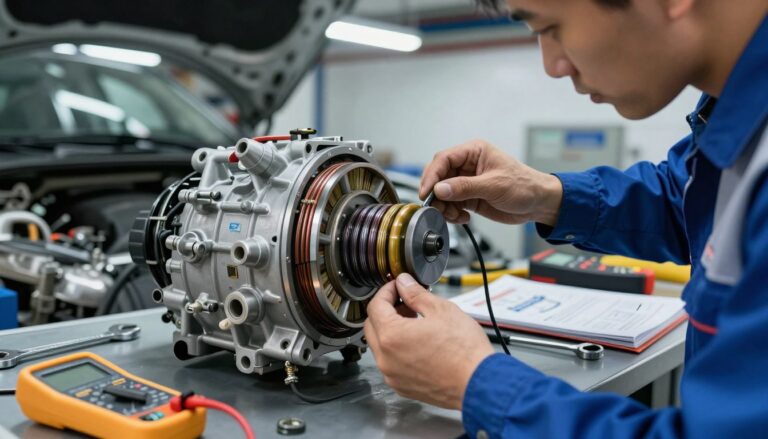
The compressor is key for cooling. A faulty compressor or its clutch can mess things up. This might make the AC blow warm air.
Fixing this needs special tools and skills.
Clogged Expansion Valve or Orifice Tube
The expansion valve and orifice tube control refrigerant flow. A clog in these parts can stop the AC from cooling right. Cleaning or replacing them might help.
Malfunctioning Blend Door Actuator
The blend door actuator mixes cold and warm air. A bad actuator can make the AC blow uneven temperatures. You might need to check its electrical and mechanical parts.
Tools and Safety Equipment Needed for DIY Diagnosis
Before you start fixing your car’s AC, get the right tools and safety gear. This helps you work better and stay safe. You’ll be dealing with stuff that might be harmful.
Essential Tools for AC Troubleshooting
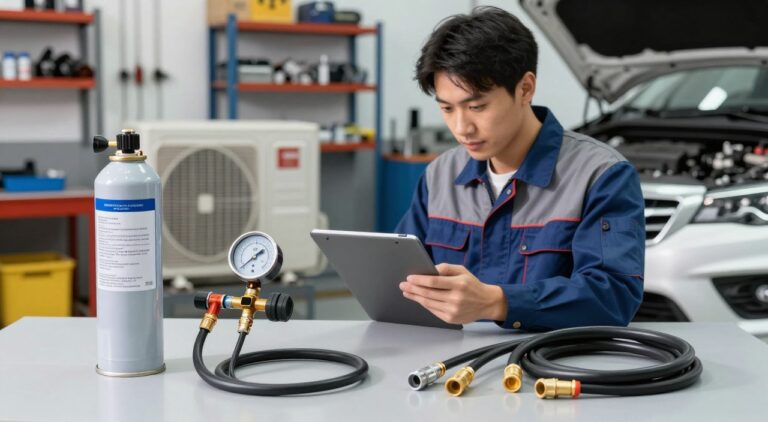
You’ll need some basic tools for car AC troubleshooting. A manifold gauge set is key for checking refrigerant pressure. A thermometer is for temperature checks, and a multimeter is for electrical issues. These tools make finding problems easier.
Safety Gear When Working with AC Systems
Always think about safety first. Wear protective gloves and safety glasses to protect yourself. A mask is also good to keep away from bad smells.
Optional Specialized Equipment
For harder tasks, think about getting special tools. An AC leak detector or a refrigerant identifier can be very helpful. They’re great for detailed vehicle AC diagnostics and car HVAC maintenance.

Diagnosing the Issue: Step-by-Step Process
The first step to fix your car AC is to find out what’s wrong. You need to watch how the AC works, look for odd signs, and use your senses. This helps find the problem.
Observing the AC Behavior Pattern
Watch when the AC blows cold or warm air. Does it always do the same, or does it change? Noting these patterns helps find the cause of the intermittent cooling issue.
Checking for Unusual Noises
Listen for strange sounds when you turn on the AC. Clunking, grinding, or hissing means there’s a problem. It could be with the compressor, fan, or other parts.
Inspecting for Visible Leaks
Look for oil stains or refrigerant leaks on the AC system. A leak can make the AC blow warm air if the refrigerant level gets too low.
Using Your Senses to Identify Problems
Use your senses to help find the problem. Check the air temperature and feel for vibrations when the AC is on. These clues can help you figure out what’s wrong with your car AC repair.
By following these steps, you can find and possibly fix the problem with your car’s AC.
Testing Your Car’s AC System Pressure
Testing your car’s AC system pressure can help find why it’s not cooling right. You use a special tool to check the pressure in the AC system.
How to Use an AC Pressure Gauge
You need an AC pressure gauge to start. It measures the refrigerant pressure in your car’s AC system. First, find the low and high-side service ports on your car’s AC system. They are labeled and have different sizes to keep things right.
Then, connect the pressure gauge to the service ports. The gauge shows the pressure for both sides of the system. Always check your car’s repair manual for the right steps and normal pressure ranges.
Interpreting High and Low Side Pressure Readings
The pressure readings tell you about AC system problems. Low pressure on the low side might mean a refrigerant leak. High pressure on the high side could be a blockage or condenser issue.
High low-side pressure means it’s overcharged. Low high-side pressure might point to a compressor problem.
What Pressure Fluctuations Tell You
Pressure changes also give clues about the AC system. If pressure drops when the compressor starts, it could be a leak or a bad compressor clutch. Knowing these changes helps with car AC troubleshooting and vehicle AC diagnostics.
By looking at the pressure readings, you can figure out air conditioning fluctuations problems. Then, you can fix your car’s AC to work right again.
Fixing Low Refrigerant Issues
Fixing low refrigerant issues in your car’s AC system is key. It helps keep your car cool and stops damage. Low refrigerant can make your car less cool and might break the compressor.
Finding and Repairing Refrigerant Leaks
First, find and fix any leaks in your AC system. Leaks can happen for many reasons like broken hoses or corroded parts. Use a leak detector or UV dye to find them.
Once you find a leak, fix or replace the broken part. This stops more refrigerant from leaking out.
After fixing the leak, add the right amount of refrigerant. Too much or too little can harm your AC system.
Properly Recharging the AC System
To recharge your AC, first, get rid of the old refrigerant. Then, check for leaks and add new refrigerant. Make sure to use the right type and amount as your car’s manual says.
| Recharge Step | Description |
|---|---|
| 1. Evacuate | Remove remaining refrigerant from the system |
| 2. Leak Check | Inspect the system for any leaks |
| 3. Refill | Recharge the system with the correct refrigerant |
Safety Precautions When Handling Refrigerant
When working with refrigerant, safety is very important. Wear gloves and safety glasses. Make sure the area is well-ventilated and don’t let refrigerant escape into the air.
It’s also important to dispose of used refrigerant properly. This helps protect the environment.
«The handling of refrigerants is regulated by environmental laws due to their potential to harm the ozone layer and contribute to climate change.»
EPA Guidelines
By following these steps and being careful, you can fix refrigerant issues in your car’s AC. This keeps your car cool and working well for a long time.
Addressing Compressor and Clutch Problems
Fixing compressor and clutch issues is key to solving AC problems. The compressor is vital for cooling your car. Any problem can make cooling uneven.
Diagnosing a Failing Compressor
A bad compressor might make strange noises, leak, or cool unevenly. Look for wear or damage on the compressor to find the problem.
Testing and Replacing the Compressor Clutch
The compressor clutch turns the compressor on and off. Test it by checking the electrical and mechanical parts. If it’s broken, you might need to replace it.
| Symptom | Possible Cause | Solution |
|---|---|---|
| Compressor not engaging | Faulty clutch or electrical issue | Replace clutch or repair electrical circuit |
| Intermittent cooling | Compressor cycling issues | Check refrigerant levels and compressor performance |
When to Replace the Entire Compressor
If the compressor is too damaged to fix, you need a new one. Finding out why it failed helps avoid more problems.
Compressor Cycling Issues
Problems with the compressor can make the AC blow warm air sometimes. This might be because of low refrigerant, a bad thermostat, or other reasons. Finding and fixing the real cause is important.
Fixing compressor and clutch issues quickly helps your car’s AC work better. This makes driving more comfortable.
Dealing with Clogged Components and Airflow Issues
A car’s AC system can face many problems. Clogged parts can make it blow cold then warm. It’s key to check for blockages that might be slowing it down.
Cleaning or Replacing the Expansion Valve
The expansion valve controls refrigerant flow. If it’s clogged, the AC won’t cool right. Cleaning or replacing it can fix cooling problems.
Addressing Orifice Tube Issues
The orifice tube can also get clogged. Cleaning or replacing it helps with airflow and cooling.
Flushing the AC System
Flushing the AC system might be needed. It removes dirt and helps the system work better.
Checking for Condenser and Evaporator Restrictions
Blockages in the condenser or evaporator affect airflow and cooling. Checking these parts for problems is important.
Fixing Electrical and Control Issues
Electrical and control problems can make your car’s AC work wrong. It might blow cold air then warm air. Finding the cause can help fix it.
Troubleshooting Blend Door Actuator Problems
The blend door actuator controls your car’s temperature. If it’s broken, the AC might blow warm air. Check its electrical connection to see if it’s working right.
Checking Fuses, Relays, and Pressure Switches
Fuses, relays, and pressure switches are key to your AC system. Look for damaged or worn-out fuses. Test the relays to make sure they work. Also, check the pressure switch to see if it’s okay.
| Component | Function | Common Issues |
|---|---|---|
| Blend Door Actuator | Controls temperature | Faulty electrical connection, mechanical failure |
| Fuses | Protects electrical circuits | Blown fuse, corrosion |
| Relays | Controls electrical current | Faulty relay, worn contacts |
Addressing Control Panel Malfunctions
The control panel is the AC system’s brain. If it’s not working, the AC might blow warm air. Make sure its electrical connections are good.
Testing the Cooling Fan Operation
The cooling fan helps cool the condenser. Check its electrical connection. If it’s not spinning, look at the fuse or relay for it.
Preventative Maintenance to Avoid Intermittent AC Problems
By taking a proactive approach to AC maintenance, you can avoid many problems. Regular maintenance keeps your car’s AC system working well. It also makes it last longer.
Regular AC System Check-ups
Regular check-ups are key to finding issues early. I suggest getting your AC system checked at least once a year. Or as your car’s maker says.
Keeping the Condenser and Radiator Clean
A clean condenser and radiator are important for airflow and heat. Regularly check and clean these parts to avoid clogs and damage.
- Inspect the condenser and radiator for debris and dirt
- Use compressed air or a soft brush to clean the components
- Check for any signs of damage or wear
Running Your AC System Year-Round
Running your AC system all year keeps it lubricated. This helps it work right.
Replacing Cabin Air Filters
Changing cabin air filters often is key for clean air. It also keeps your AC system running well. Check your owner’s manual for when to change them.
Conclusion
Fixing a car AC that sometimes blows cold and sometimes warm can be tough. But, with the right steps, you can solve the problem. Knowing how your car’s AC works helps a lot.
Maybe your AC needs more refrigerant, or the compressor is broken. Or maybe the expansion valve is clogged. Finding and fixing the main problem makes your AC work right again.
Regular checks and clean-ups help too. This keeps your AC from having problems. So, your car stays cool, even when it’s really hot outside.
Fixing your car’s AC makes driving more comfortable. If you’re not sure how to fix it yourself, don’t worry. A professional mechanic can help with car AC repair.
FAQ
Why does my car AC blow cold then warm intermittently?
Many things can cause this problem. It might be low refrigerant, a bad compressor, or a clogged valve. It could also be a faulty actuator.
How do I diagnose the issue with my car’s AC system?
Start by watching how your AC works. Look for leaks and listen for strange sounds. Use a pressure gauge to check the system.
What are the common causes of intermittent cooling issues in car AC systems?
Issues like low refrigerant or a bad compressor can cause problems. Clogged valves or a faulty actuator can also be the culprit. Regular checks can help avoid these problems.
Can I fix the issue with my car’s AC system myself?
You might be able to fix it if you know what you’re doing. But if it’s too hard, it’s best to get help from a pro.
How can I prevent intermittent AC problems in my car?
Regular checks and keeping things clean can help. Running your AC all year and changing filters also helps.
What safety precautions should I take when working with AC systems?
Always wear gloves and safety glasses. Follow the right steps when handling refrigerant to stay safe.
How often should I check my car’s AC system pressure?
Check it often, if your AC is acting up. This can spot problems early.
Can a clogged air filter cause my car’s AC to blow warm air?
Yes, a dirty air filter can block airflow. This makes your AC blow warmer. Change the filter to fix it.
What are the signs of a failing compressor in my car’s AC system?
Look for odd noises, less cooling, and more energy use. If you see these signs, get your compressor checked.